

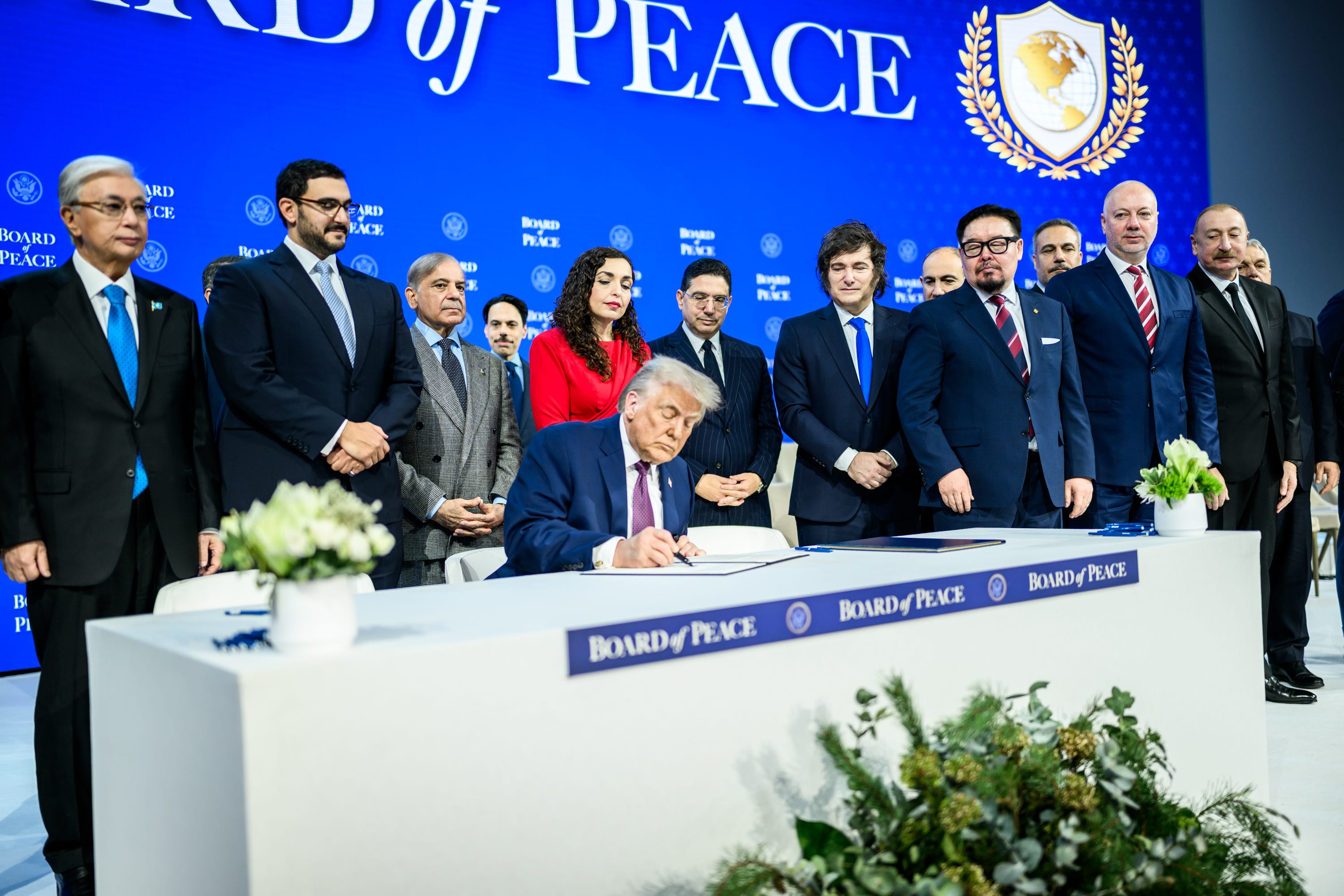
Training as an international-relations scholar in the ‘00s meant getting pounded with the idea that multilateral institutions are good because they facilitate cooperation and, by logical extension, reduce the prevalence of war. Multilateralism’s web also happened to be part of globalization in an age when scholars, pundits, and politicians alike presented globalization as an inevitable force of nature. To oppose the multilateralism-as-virtue premise was to be a war fetishist who devalued anything that wasn’t military power.
Coming to live in New Zealand a decade or so after receiving that training, I encountered a country whose lanyard class views multilateralism in precisely the way an IR scholar from the early ‘00s would. Their (our) foreign policy elites have always taken for granted that multilateralism is good. Multilateral institutions give New Zealand a means of fulfilling its self-conception as a “small trading nation” by plugging into the matrix of global capitalism, and a “good global citizen” by pooling its efforts with others.
But this way of thinking has not only evaded crucial questions all along;1 it has been outmoded by reality—the reason for my intervention here.
We should be conceptually clear: Multilateralism is form without content. Forms have no inherent valence. In our conjuncture, the cooperation that multilateral exchange facilitates is increasingly directed toward war, exploitation, and domination—the very things multilateralism had been presumed to be a bulwark against.
We should’ve always been aware of the political work that multilateral cooperation was doing. After all, the godfather of neoliberal IR himself, Robert Keohane, confessed in 2020 that he fucked up:
My work on multilateral institutions, which was done in a period of increasing multilateral cooperation, is challenged by increasing inequality in capitalist democracies, financial crisis, and nationalist forms of populism.
If Keohane can update his priors at least this much, the rest of us have no excuse.
Scholars of MAGA politics during Trump 1.0 often commented that Trump foreign policy opposes multilateral institutions. When Mike Pompeo was Trump’s Secretary of State, he gave a now-forgotten speech in 2018 that not only said as much, but that foreshadowed his small-handed successor’s withdrawal from 66 international institutions earlier this year:
Multilateralism has too often become viewed as an end unto itself. The more treaties we sign, the safer we supposedly are. The more bureaucrats we have, the better the job gets done. Was that ever really true?…exiting or renegotiating outdated or harmful treaties, trade agreements, and other international arrangements that do not serve our sovereign interests, or the interests of our allies…We’re supporting institutions that we believe can be improved; institutions that work in American interests.
At the time of Pompeo’s speech, concluding that Trump was against multilateralism wasn’t wrong. Increasingly, though, it’s just not right.
Trump 2.0 has been extremely active fashioning multilateral arrangements that facilitate imperialist relations 1) between the global North and South but also 2) between the US and everyone else. These efforts lack vision, and are pregnant with contradictions, but they have the US groping toward a reactionary, anti-liberal, some might say fascist, global order. I’m talking about an imperialist multilateralism. It’s happening right in front of us but is being wildly mischaracterized and misunderstood.
The Board of “Peace” is the most grotesque example of imperialist multilateralism, coordinating the dispossession of Palestinian land via ethnic cleansing and ensuring that the worst humans in the world profit from it. In MAGA elites’ own explanation of the Board, moreover, they have ambition for it to displace the United Nations.
Less rapaciously evil but still imperialist is “Pax Silica,” which traffics in euphemisms about resilient supply chains for advanced technologies industries. That rationalization, of course, masks why these technologies matter to the US security state, how they’re being securitized, who benefits from all of it, and at whose expense it all comes. Pax Silica is attempting to concentrate quasi-monopoly control of the highest-profit sector of the global economy in specifically the hands of the US and its rich protectorates, at the expense of China and anyone on friendly terms with it.2 That makes it a circuit in the process of reordering world politics into exclusionary imperialist blocs (which hopefully won’t succeed!).
Crucially, Pax Silica doesn’t work on its own; it’s conjoined with the Minerals Security Partnership (MSP). The two initiatives focus on upstream sources of material power. Governments who are party to the MSP are unwittingly feeding the American war machine while making resource extraction and all the harms that accompany it a growth industry. Both MSP and Pax Silica are imperialist because of the larger project they’re part of—facilitating inter-imperial rivalry—but also because they impose and perpetuate unequal exchange between the US and everyone else.
The MSP, in particular, is nothing more than rich countries of the global North coordinating a regime of extraction from the global South—it’s specifically about securing critical minerals and yet the places the minerals have to come from aren’t “members.” In any other era, everyone would have recognized the stench of imperialist extractivism.
Pax Silica and MSP also accompany other civilization-coded, MAGA-led confabs like “Shield of the Americas,” the Ministerial on the Resurgence of Political Terrorism, the Board of “Peace,” and others. These are completely made up arrangements—in Washington, the fashionable term is “minilateralism”—but they’re also the ligatures of fascist worldmaking. Hard-right substitutes for the liberal-coded multilateral institutions that the Trump administration has been warring against ever since it withdrew from the Paris Climate Accords.
And that’s one reason we know the new multilateralism is part of a larger bid to reorder global politics in favor of what you might call imperialist primacy—the Trump administration wants the benefits of presiding over a global hegemonic order but shorn of any obligations or reciprocal restraint that come with maintaining a hegemonic order. Classical theorists had a word for preponderant power minus obligation or restraint: Domination. The Trump administration is attempting to delegitimize and destroy the architecture of liberal ordering in favor of imperial ordering, especially with the global South. All the new MAGA multilateralisms—all of them—are part of that process.
The insult to injury is that much of this vast complex of villainous activity is justified entirely in terms of great-power rivalry with China. And that rivalry, as The Rivalry Peril makes clear, is bad for democracy, bad for the prospect of peace, and bad for any and all struggles for equality.
In an age where “great-power politics” is the norm, multilateralism with empire-states or far-right regimes is necessarily a mask for predatory power politics. The feeling of siege and tumult we experience in the darkness of now risks people reflexively embracing multilateral forms irrespective of content. But that would be relenting to an evil order rather than fighting for the one we need. Don’t be that person.
Hey, friend! You might have noticed that I’m offering more of Un-Diplomatic without the paywall; I’m trying to keep as much as possible public. But to do that requires your help because Un-Diplomatic is entirely reader-supported. As we experiment with keeping our content paywall-free, please consider the less than $2 per week it takes to keep this critical analysis going.
With whom should a “good global citizen” pool their efforts? Who shares our political aims? And in what way is aligning with a former hegemon that has become the leading threat to global financial stability even good for a “small trading nation?”
Even supposed allies of the US are getting fleeced by Pax Silica. Under Pax Silica, the Philippines is being celebrated because its territory is exploited as a deregulated special economic zone, which, as Quinn Slobodian has written, is a way of exploiting the locals to the benefit of foreign capital. A way of circumventing, and thereby weakening, both sovereign control of the economy and organized labor.