

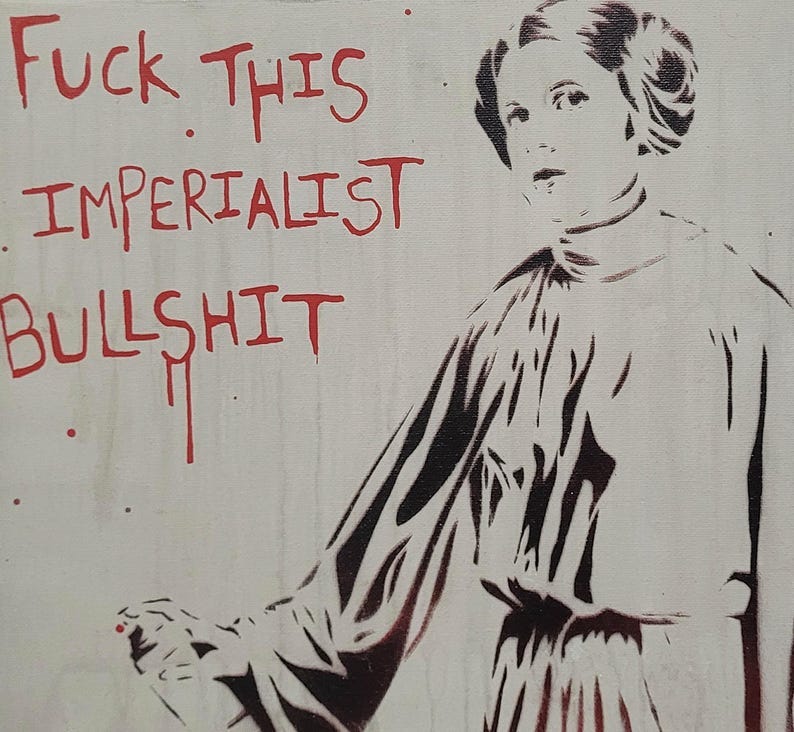
Why does the United States keep waging one bullshit war after another? Especially when it can’t seem to win any of them?
No answer would be complete without grasping the pathologies of the national security state. Technocrats, military officers, and think-tankers form a highly indoctrinated class that thinks of itself as non-ideological. But their ideology is a self-exculpating alchemy of brute force and American exceptionalism that redounds to the benefit of American oligarchs.
This ideology of national security is why, for more than 40 years, Democratic, Republican, and MAGA presidencies alike have pursued primacy whether they referred to it that way (many have) or not. Some have emphasized international institutions. Others have venerated allies. Some have prioritized the Middle East and civilizational conflict. Others Asia and great-power war. But all have pursued primacy.
What is primacy?
It is an ideal-type grand strategy of domination that presupposes—and tries to preserve—global military superiority. In one of the classic-but-not-good works on grand strategy, primacy was defined this way:
Primacy holds that only a preponderance of power ensures peace…an imbalance of power…Primacy is most concerned with the trajectories of present and possible future great powers…Advocates of primacy view the rise of a peer competitor…to offer the greatest threat to international order…The objective of primacy, therefore, is…to preserve U.S. supremacy.
From this we can distill primacy as a strategy with three attributes:
It requires an extreme imbalance of power in the world-system favoring the US;
It prioritizes rising great powers as the foremost threat to the state; and
It insists on using force to contain or diminish even hypothetical challenges to US supremacy.
That is what US policymakers have been committed to since at least the Reagan years.
For most of the “unipolar moment,” the primacy strategy was explicit. But from the Biden presidency to now, some national-security bros (and lady bros) have been in denial about the primacist character of what they advocate—an indication that they’re unaware of the very project they’re complicit in carrying out. The objective standard for diagnosing a primacy strategy (the three attributes above) is useful for precisely this reason; it helps us know the national-security bro better than he knows himself.
By conflating hard power with security, and allowing nationalism to infect his analysis of the world, the national-security bro cannot inquire about who benefits from US foreign policy; cannot accept responsibility for anything that goes wrong in the world; cannot comprehend that military preparedness and warmaking does little more than manage the contradictions inherent to capitalism.
As I wrote in 2023:
One must squint quite hard to discern a theory of stability in a strategy that demands a favorable imbalance of military power, the active proliferation of weapons platforms, and muscle flexing in the name of signaling resolve.
The problem with primacy is that it is at once a self-regarding, self-exculpating, and self-defeating way of relating to the world:
Even if U.S. primacy was once a source of regional stability, there is little basis to think it will promote harmony today. The United States’ global power has diminished over the past generation, making it harder for Washington to direct the world. Other states have a newfound desire and capacity to resist, subvert, lash out against, or seek alternatives to U.S. preferences, including through violence. And the power of these countries is likely to continue to grow. It defies history to expect that dusk will never come for U.S. hegemony…
I have to frame all of this in terms of the ideology of national security because only that ideology—and the pathology of power it contains—could systematically prevent successive generations of well-educated people with mid-to-no fashion sense from seeing the most basic fact about international relations in the 21st century: The global distribution of power makes primacy impossible. The national-security state conceives of a role for itself in the world that bears little resemblance to how the world today actually works.
That’s why the Houthis could fight the US to a draw. That’s why the US could bluster into war with Iran. That’s why the US finds itself short on ammunition (of all things!). And that’s why the US will keep fighting bullshit wars anyway.
The mode of statecraft must match the moment in which it engages. America’s share of global power is less than at any point since the Cold War. Our world is multipolar; the unipolar moment is over. And yet, primacy is a strategy that is only possible in a unipolar world. To pursue primacy anyway is to invite arms races and military misadventures until we’re all dead.
Hey, friend! You might have noticed that I’m offering more of Un-Diplomatic without the paywall; I’m trying to keep as much as possible public. But to do that requires your help because Un-Diplomatic is entirely reader-supported. As we experiment with keeping our content paywall-free, please consider the less than $2 per week it takes to keep this critical analysis going.
Did you catch the latest episode of The Bang-Bang Podcast, where we discuss Inglorious Basterds (2009) while diagnosing America’s geopolitical folly?
