Adam Tooze on the End of Hegemonic Ordering
Hey, friend! You might have noticed that I’m offering more of Un-Diplomatic without the paywall; I’m trying to keep as much as possible public. But to do that requires your help because Un-Diplomatic is entirely reader-supported. As we experiment with keeping our content paywall-free, please consider the less than $2 per week it takes to keep this critical analysis going.
The homie Adam Tooze went on Ezra Klein’s podcast.1 The show was insightful, as expected; worth your time.
But toward the end of the conversation, Tooze made some comments about how best to understand our historical conjuncture and I want to clarify them in relation to an often-misunderstood intellectual tradition known as world-systems analysis:
…we’re not even in an interregnum. Because an interregnum implies another regnum afterwards…You can do these weird things where you extend this back to the Duth and the Genoese, but I don’t buy it…
…if you’re looking for order, you’ll never see it. But if you’re looking for ordering attempts, actions…it’s all around us all the time…we have never been in a planet like this before. We have never had 30 or 40 incredibly highly competent nation state players…
Klein then asks:
your view of the situation is not that we are in a mechanical transition from an American order to a Chinese order?
Tooze replies:
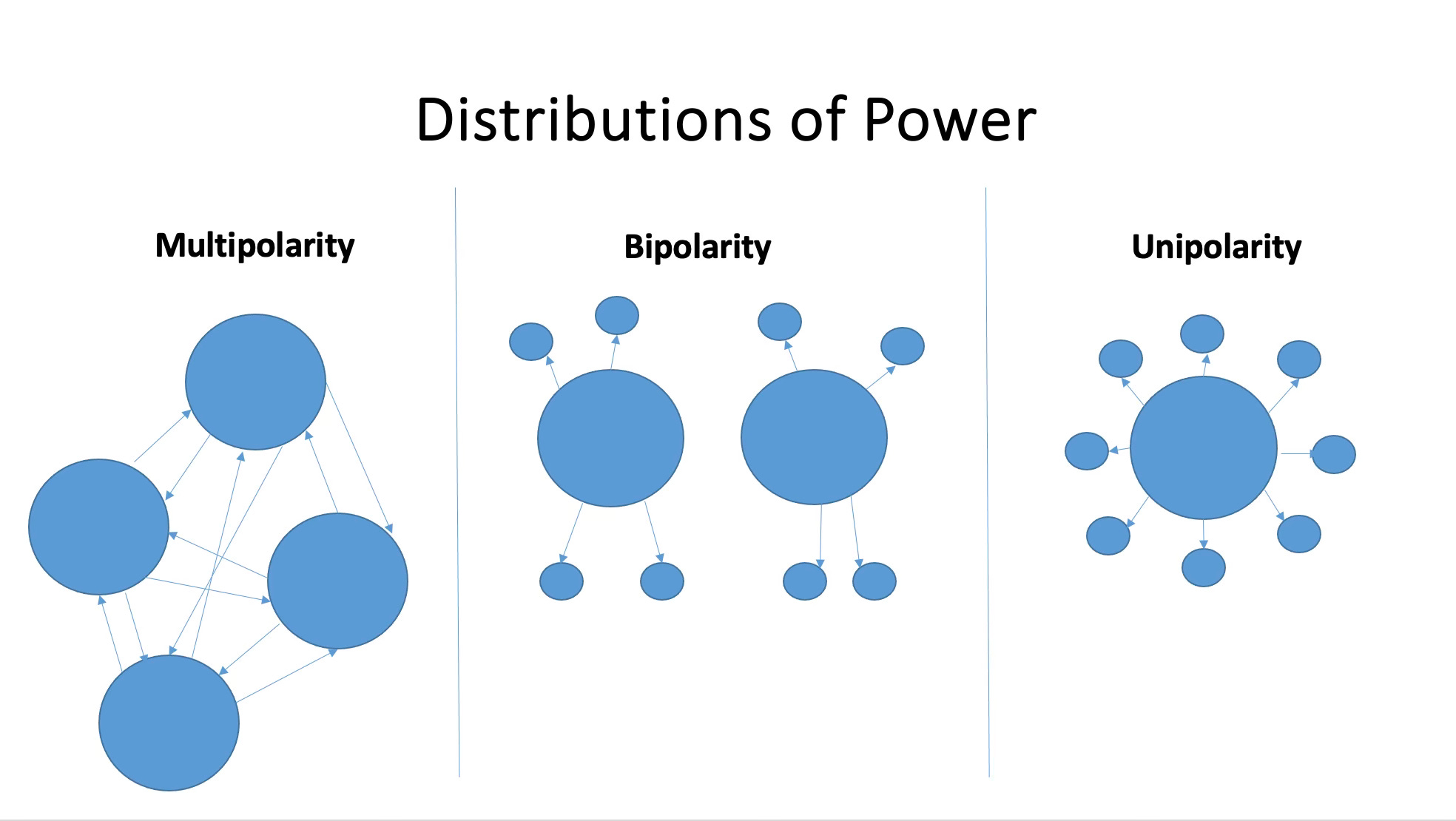
I think that’s not just wrong and implausible, it’s also dangerous because it immediately sets the American alarm bells off. If we speak in those terms, that’s what motivates all of the ultra hawkish position…Chinese have got these extraordinary visions of ultra long-distance electricity transmission, wiring up ASEAN in a single electricity system. But it doesn’t add up to global hegemony to my mind…American hegemony is, in the mid-20th century, is an extraordinarily unique and even more the unipolar moment—they’re extraordinary unique formations in historical terms. I don’t see any reason to derive from that some sort of historical model of where we go next.
This is all very smart.
For the uninitiated, what Tooze is referring to with “interregnum” is the famous quote from Antonio Gramsci in the 1930s, “The crisis consists precisely in the fact that the old is dying and the new cannot be born; in this interregnum a great variety of morbid symptoms appear.”
And when Tooze gestures at the Dutch and Genoese, he’s referring to a vulgar hybrid of world-systems analysis with hegemonic stability theory. Giovanni Arrighi and other scholars of world-systems analysis have narrated the shifts in capitalism since the days of Dutch and Genoese dominance half a millennium ago as evolving through cycles of hegemonic ordering. A single dominant power (a hegemon) orders inter-capitalist relations in fundamental ways, and the process of doing so produces its own long decline, followed by periods of instability (often war), followed by the re-concentration of power in the hands of a new hegemon. The capitalist world-system has thus cycled through Genoese (15-16th century) Dutch (17th century), British (18-19th century), and American (20th century) hegemonies.
This way of understanding the capitalist world-system over time allowed us to anticipate and now perceive in real-time America’s inevitable hegemonic decline. But there’s a misunderstanding in how some people might make sense of what Tooze is referring to here.
When Tooze says he “doesn’t buy it” about cycles of hegemony, he’s referring to the vulgar idea that America’s decline must necessarily usher in the hegemony of a new power (obviously China). He doesn’t buy that, and neither do I. Neither do world-systems analysts!
I recently finished a close, deep reading of Arrighi’s master work, The Long Twentieth Century, and he does not assert that a new hegemonic order will follow American decline. There is some speculation at the end of the book about East Asia being the new global North, in effect, which is increasingly conventional wisdom anyway. But nothing about a new dominant single power, nothing about now being an interregnum followed by a new regnum.
The confusion arises because cycles of hegemony are only identifiable within capitalism itself; it’s the expansionist imperative of the capitalist mode of production that knits together the world-system. But many world-systems analysts recognize that capitalism is on borrowed time. Cycles within capitalism do occur in intervals, but only as long as capitalism continues to dominate global relations. We’ve had a good 500 years in which each hegemonic order emerges out of the crisis of the previous order…capitalism is prone to crisis until it can no longer be patched up, until it reaches its terminus and the world-system becomes something else.
I believe, and it seems Tooze believes, that what we’re entering into is the world-system becoming something else. A world in which even China cannot deign to become global hegemon. The way in which “rupture” is a correct way to think about our conjuncture, then, is that we’re living through a rupture of the old hegemonic cycles and what’s emerging is some other thing. I wouldn’t call it post-capitalist, because capitalism isn’t going away, but it won’t be a capitalist world-system that orders relations. This is where my dystopian theory of primitive accumulation comes in.2
So a sophisticated reading of world-systems analysis can help us in this moment. By contrast, assumptions that global stability must derive from a single dominant power collapse into scaremongering about China.
I gave up on this show some time ago and now only listen when it hosts a guest of interest, like Tooze.
In essence, “primitive” forms of capital accumulation, such as dispossession, conquest, and colonialism, are much more likely to occur and become more pervasive in a low-growth world where no sectors of the economy seem promising. This is the one-sentence summary that defines what we’re living through.


Have you read Wolfgang Streeck's 'How Will Capitalism End?'. I'm not sure it answers the question, but it's well worth reading.