Of Root Causes and Wrong-Think About China
This has triggered me, in a productive way:
Hunter was responding to my recent piece on how the Democratic Party should/could end up viewing China in the coming years. I started writing a response to his comment because he’s raising a good question, but it turned into a full-blown argument, so I’ve converted it into a post. Here goes.
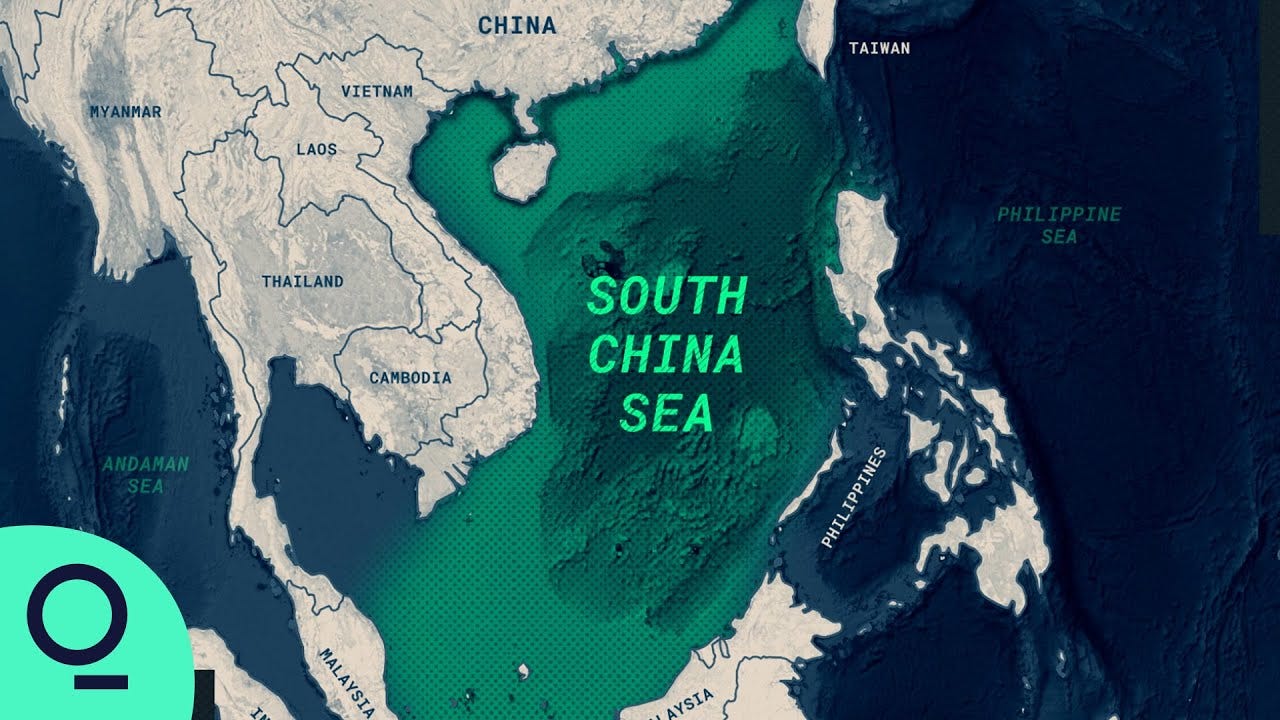
Yes, the South China Sea (SCS) is the hard test for Chinese “assertiveness.” No, China would not view war as a success. Unlike most aspects of Chinese foreign policy, the SCS issue involves acts of Chinese coercion, land reclamation, and unilateral attempts to police what amounts to a knotty six-party territorial dispute. The way China relates to the SCS is impossible to square with China’s idealistic rhetoric about international order and harmony of nations and such. Given all that, Hunter is not wrong to ask “How can your theory of China account for Chinese militarization of the SCS?”
Relational Analysis Requires Proportionality
First, we must keep proportionality in mind. When I started working this issue back in 2012, I failed to situate China in a relational context. Consequently, I fell prey to crude and very hawkish thinking, reflecting poor analysis, like discounting the simple fact that China is not the only party engaged in unilateral action, including land reclamation, in the SCS.
More importantly, evidence of Chinese assertiveness in the SCS consists entirely of non-war, noncombat, and technically nonviolent actions, and yet it’s common for foreign-policy nerds to assume that China’s daring us to launch World War 3 (which is absurd). So we should reflect on how the pundit class has normalized coding restraint as aggression (China is being aggressive, but when that aggression is non-violent it’s also very literally restraint…imagine militaries around the world applying these standards to the US).
Inequalities at the Root
Domestic imbalances are at the root of Chinese assertiveness in the SCS. I covered this in The Rivalry Peril with Mike Brenes. Domestic imbalances—which are bound up with US domestic imbalances—are the source of inter-imperial rivalry. Accordingly, inter-imperial rivalry is underneath most “grey zone” activity (a neologism that I hate because it scandalizes zero-sum actions that are inherent to geopolitical rivalry…for example, any student of inter-Korean rivalry over the decades recognizes what’s been happening in the SCS…but nobody talks about Korean “grey zones” except for the most deranged hawks).
Territorialist Logic in Response to a Crisis of Accumulation
There are added pressures driving China toward an aggressive posture in the SCS that are part of my root-cause theory of insecurity.1 I find the conventional ways of viewing the SCS—through a lens of either clashing nationalisms, the banal hypocrisies of international law, or confirmation bias that China is bad—as incurious and analytically shallow. I didn’t quite put it this way in The Rivalry Peril, but I’ve come to see the growth of friction around SCS disputes as the early reassertion of territorialist over capitalist logic that Giovanni Arrighi wrote about decades ago.
Viewing the SCS in isolation makes it impossible to see this, but heightened friction in the SCS really nests within a global trend associated with the long process of hegemonic decline. It’s useful, then, to think of the SCS an early sign of the proliferation of imperialist statecraft I’ve been writing and speaking about. And that trend is itself the product of domestic imbalances (which are part of the crisis of capitalism in our current conjuncture).
Geopolitical Brain Rot
Finally, from a maritime strategy perspective, China needs to expand into the SCS to counter US encirclement. I don’t think China should be expanding in the SCS, and I don’t think the US should be encircling China in the first place. But this is how militaries think. It’s also why the US should (but probably won’t) demilitarize and decolonize its presence in the Pacific Islands—militarization attracts the zero-sum geopolitical logic that reduces the security of the region.
To put it differently, the SCS is less secure because of Chinese actions, but Chinese actions are partly a geopolitical response to its strategic encirclement. This is one of the reasons that reducing US force presence in the region is strategically important.
I suppose I should add one last bit. A scenario is possible that, from the US perspective, would be nightmarish: That China attempts to regulate control of the South China Sea via some procedure more sophisticated than Iran’s enclosure of the Strait of Hormuz. I don’t think that will happen! But it could. Enclosures are entirely consistent with the spread of imperialist geopolitics; that’s literally what it means to assert power through territorial vice capitalist logic. But the US is simply not in a position to prevent that situation by force. This is one of the real constraints that multipolarity imposes.
Hey, friend! You might have noticed that I’m offering more of Un-Diplomatic without the paywall; I’m trying to keep as much as possible public. But to do that requires your help because Un-Diplomatic is entirely reader-supported. As we experiment with keeping our content paywall-free, please consider the less than $2 per week it takes to keep this critical analysis going.
I wouldn’t call it a theory of Chinese aggression because, again, fuck the pundits and their one-sided Orwellian use of vocabulary.